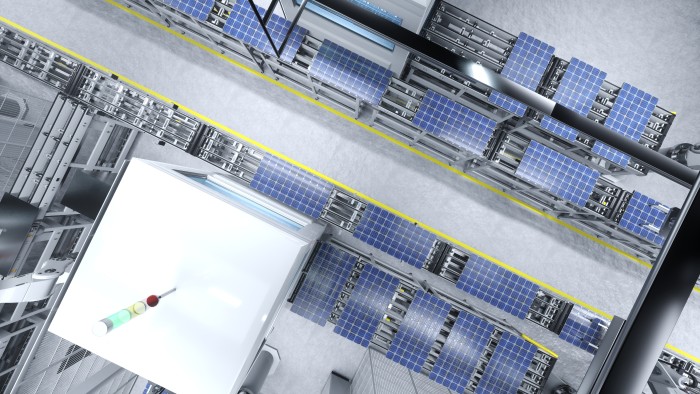
The energy transition is driving a profound transformation in the way electricity is generated, distributed, and consumed. However, the rapid growth of renewable sources such as solar and wind energy also presents a major challenge: how to manage variable and intermittent energy production in a stable and profitable way.
In this context, renewable energy storage has become a strategic component for maximizing operational efficiency, improving grid stability, and increasing the profitability of renewable assets. Through technologies such as BESS systems and advanced optimization platforms, energy storage no longer simply preserves energy — it transforms it into a competitive and financial advantage.
What Is Renewable Energy Storage?
Renewable energy storage is fundamentally defined as the ability to capture excess energy generated by clean sources, such as solar photovoltaic or wind power, during periods of high production and low demand, and release it later when the natural resource is unavailable or demand becomes critical.
In today’s energy ecosystem, storage is no longer a luxury but an operational and financial necessity. Its importance is based on three critical pillars for the grid:
1. Balancing Supply and Demand
Renewable energy sources are inherently variable. Renewable energy storage adds flexibility and dispatchability to these technologies, allowing energy to “wait” for the consumer instead of the other way around.
2. Avoiding Curtailment
During periods of technical saturation, grid operators often require renewable plants to reduce or stop production. Energy storage absorbs that excess energy that would otherwise be wasted, turning a technical limitation into a stored asset.
3. Grid Stability and Resilience
Storage systems provide fast-response services as well as frequency and voltage support, which are essential for maintaining power system stability during disturbances.
Key Technologies for Renewable Energy Storage
While there are various ways to store energy, Battery Energy Storage Systems (BESS) have become the industry standard due to their versatility and millisecond response times.
- BESS (Lithium-Ion and Beyond): Lithium-Ion batteries dominate the market thanks to their high energy density and technological maturity. However, for long-duration applications, flow batteries (such as vanadium) are emerging as a robust alternative.
- Other Technologies: Pumped hydro remains the world's largest storage reserve but is limited by geography. Thermal storage and compressed air are also valid options, yet they lack the modular flexibility of batteries.
Today, the true differentiator is not just the cell chemistry, but the synergy between batteries and optimization software.
A BESS without intelligence is a passive asset; it is the software that transforms renewable energy storage into a flexible tool capable of operating across multiple markets simultaneously to maximize value.
How Renewable Energy Storage Creates Value
The value of renewable energy storage goes far beyond simply accumulating kilowatt-hours. Its true power lies in its ability to generate multiple revenue streams through what is known as Revenue Stacking.
Load Shifting
Storage systems allow energy to be sold when market prices are higher, significantly improving profit margins per MW generated.
Peak Shaving
In industrial facilities, batteries help reduce peak demand charges, optimizing the customer’s operational costs.
Participation in Ancillary Services Markets
Batteries can participate in ancillary services such as frequency regulation and balancing reserves, which are highly compensated by system operators due to their need for immediate response.
ROI Maximization
By integrating storage, renewable assets stop being simple “price takers” in the SPOT market and become strategic assets capable of deciding when and how to sell energy for maximum profitability.
How Bluence Optimizes Renewable Energy Storage: An End-to-End Approach
At Bluence, we understand that battery projects can become a complex ecosystem involving regulation, warranties, and market volatility. Our approach is to provide synchronization through comprehensive end-to-end management that connects the plant directly to the market.
1. Connect (Technical Layer)
Through our Power Plant Controller (PPC) and Master PPC, we ensure batteries comply with the most demanding grid codes, including PO 7.4 in Spain and NERC-CIP standards.
We guarantee critical functions such as:
- Black Start
- Ramp Rate Control
- Fast Frequency Response
This helps avoid penalties while ensuring grid stability from day one.
2. Operate and Control (Supervisory Layer)
With Bluence SCADA and Central SCADA, operators gain full real-time visibility into asset performance and health.
We centralize alarm management to reduce MTTR and ensure system availability whenever the market requires it.
3. Protect (Asset Management Layer)
Bluence APM acts as the guardian of the investment by using intelligent degradation models that monitor the battery’s State of Health (SoH).
Every charge and discharge decision considers asset degradation versus expected economic return, helping protect manufacturer warranties.
4. Monetize (Market Layer)
This is where the BESS Optimizer and Bluence Trading make the difference.
Our Revenue Stacking technology calculates in real time which market is most profitable at every moment — whether energy arbitrage, frequency regulation, or capacity markets.
Through 24/7 automation, we execute bids automatically and continuously, capturing opportunities in highly volatile markets where human intervention alone is insufficient.
Por qué el almacenamiento de energía renovable es clave para el futuro
Renewable energy storage has transitioned from a future promise to an essential requirement for any operator or owner seeking long-term competitiveness. Without intelligent management, storage assets risk premature degradation or missing windows of opportunity in an increasingly complex power market.
Why trust Bluence?
- Security: Strict compliance with technical regulations and cybersecurity standards.
- Efficiency: Minimizing energy losses and maximizing the lifespan of BESS batteries.
- Profitability: Transforming a complex technical asset into a predictable and optimized financial business unit.
Investing in storage is just the first step; Bluence is the engine that makes it profitable.
FAQs – Renewable Energy Storage
What does Revenue Stacking mean in a BESS system?
Revenue Stacking refers to generating income from multiple energy markets or services simultaneously, such as energy arbitrage, frequency regulation, or capacity markets.
What is the State of Health (SoH) of a battery?
State of Health measures a battery’s actual condition compared to its original capacity and helps track degradation over time.
What is energy curtailment?
Curtailment occurs when a renewable power plant must temporarily reduce or stop production due to technical limitations or grid congestion.
Why is software essential in an energy storage system?
Software enables automatic optimization of charging, discharging, and participation in energy markets to maximize asset profitability.
What is the difference between a BESS and a conventional battery?
A BESS includes not only batteries, but also control software, monitoring systems, protection systems, and energy optimization tools.
What is Fast Frequency Response (FFR)?
FFR is an ultra-fast response service that helps stabilize grid frequency within milliseconds during system imbalances.
.jpeg)